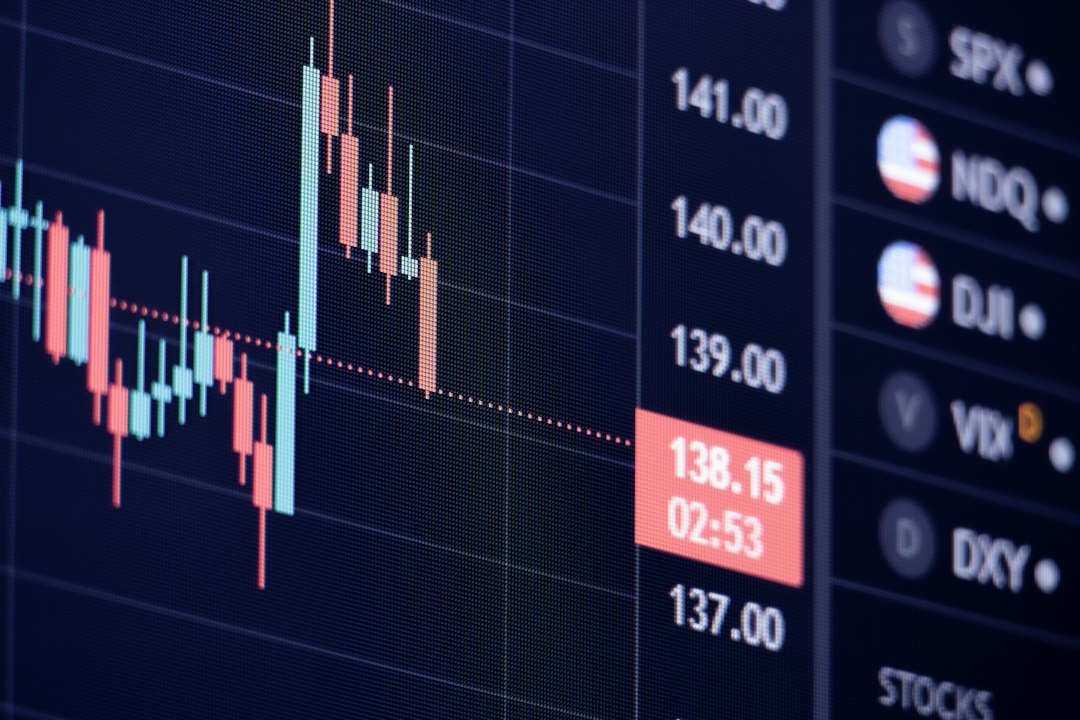
Every investor says they want certainty. Very few of them would actually buy anything if they had it. By the time a situation is clear, obvious and widely agreed upon, the price already reflects it. That’s the uncomfortable trade at the center of public markets: the discount you get for owning a good business is usually payment for enduring some fog.
I’ve watched a lot of people sit on the sidelines waiting for conditions to settle down. Rates, elections, inflation prints, geopolitical headlines, whatever the current worry happens to be. The waiting feels responsible. It feels like discipline. But if you look back over any ten-year stretch, there was never a quiet year. There was never a moment when a reasonable person couldn’t have found a good argument to stay out.
What Running a Business Teaches You About Uncertainty
Running a business teaches you that uncertainty isn’t an event. It’s the operating environment.
Over the years, in sales leadership and call-center operations, I never once had a quarter where every variable was known. Hiring markets shifted. Customer behavior changed. Costs moved. A process that worked beautifully in one period needed rebuilding in the next. Nobody handed me a forecast I could trust to the decimal. What I had was a general sense of the economics, a team I knew how to manage, and the ability to adjust as information arrived.
You don’t shut down a company because next quarter is unclear. You make decisions with partial information, you size those decisions so a wrong call doesn’t end you, and you keep operating. That’s the same posture I bring as an investor. The habits transfer more directly than people expect, which is something I’ve written about in what business owners understand about investing.
The difference is that in a business you feel the uncertainty slowly, through operations. In public markets you feel it instantly, through a quoted price. That price arrives every second of every trading day and it is very good at making you feel like you need to do something.
Why Uncertainty Breaks People
Here’s the honest analysis of why investors struggle in uncertain periods, and almost none of it is about intelligence.
Prices feel like information. A stock falling 30% feels like the market knows something you don’t. Sometimes it does. Often it’s just a lot of people feeling the same discomfort at the same time. If you haven’t done the work to separate the price from the business underneath it, you have no way to tell the difference. That’s why I keep coming back to the idea that stocks are ownership in actual businesses, not symbols on a screen.
Uncertainty rewards prediction fantasies. When things get murky, the demand for forecasts goes up. People want someone to tell them what happens next. The forecasting industry is happy to oblige. But most macro predictions are entertainment with a tie on. You can be right about the event and wrong about the market reaction, which means even a correct forecast doesn’t reliably pay.
Position sizes get exposed. A lot of investors don’t discover their real risk tolerance until it’s tested. A position that felt fine at calm prices becomes unbearable when it’s down significantly. The problem wasn’t the volatility. The problem was the size, decided earlier, in better weather.
The urge to act is overwhelming. When you’re responsible for a team, you learn that the hardest leadership move is often choosing not to intervene. Same in markets. Doing nothing is a legitimate decision, but it never feels like one.
Garrett O’Rourke Investing Principles for Uncertain Periods
I don’t have a system for predicting what the market does next. I don’t think anyone does, reliably. What I have is a set of habits that make uncertainty survivable, and occasionally useful.
Decide before you need to decide
The worst time to figure out what you believe about a company is while it’s falling. Write down why you own something before you own it. What’s the business? How does it make money? What would have to go wrong for the thesis to break? This is the entire reason I argue for understanding your investment thesis before you buy. A written thesis turns a panic into a review. You’re no longer asking how do I feel. You’re asking has anything actually changed.
Separate a lower price from a worse business
These are not the same thing and conflating them costs people real money in both directions. A business can deteriorate while the stock holds up. A business can be perfectly healthy while the stock gets cut in half because the sector fell out of favor. If you know what you own, declining prices become information you can evaluate rather than a verdict you have to accept.
Size for the scenario you haven’t imagined
Risk comes before reward in my thinking, not after. Before I get interested in what something could return, I want to understand what happens if I’m simply wrong. Permanent loss of capital is the only risk that truly matters; temporary quotational pain is the toll you pay for being in the game. I’ve laid out more of that framework in my thinking on evaluating risk before reward. Practically, it means no single position should be able to meaningfully damage you, no matter how confident you are. Confidence has a poor track record as a risk control.
Keep some dry powder, and accept the cost of it
Holding cash in an uncertain market has a real price. It drags on returns when markets rise, and it feels foolish for long stretches. But optionality has value precisely when everyone else has none. The investor with capital available during a dislocation doesn’t need to be smarter than anyone else. They just need to be solvent and unhurried.
Distinguish investing from reacting
Volatility creates a lot of activity that looks like investing but is really just reacting to the last headline. The line between investment and speculation gets blurry fastest in uncertain conditions, because uncertainty makes guessing feel like analysis. The test I use is simple: could I explain this decision to someone in terms of the underlying business, or only in terms of what I think the price will do?
Let time do the work
Nearly every advantage an individual investor has comes from time horizon. You don’t report quarterly to anyone. You can own a business through a rough eighteen months without justifying it to a committee. That’s an enormous structural edge, and most people throw it away by trading as if they had the same constraints as a fund manager. It’s the core of my long-term approach, and the reason patience matters more than cleverness.
The Opposite Failure Mode
Uncertainty doesn’t only scare people out of markets. It also pulls them into things they don’t understand. When the familiar feels risky, the unfamiliar starts looking like an escape hatch, and the crowd rushing into whatever is working right now looks like they’ve figured something out. They usually haven’t. They’re just early in a cycle that hasn’t turned yet. I’ve written separately about why FOMO costs investors, and uncertain markets are where it does the most damage.
Fear and greed aren’t opposites in practice. They’re the same impulse — the need to do something right now — pointed in different directions.
A Broader Principle
One thing I’ve learned from years in sales and operations, and from being based in Miami Beach where cycles in real estate and business are impossible to ignore: durable results come from process, not from prediction. The operators who last aren’t the ones who called the turn. They’re the ones who built something that functioned in several different environments, kept their costs sane, and didn’t bet the company on a single view of the future. The same discipline that builds a repeatable sales process builds a durable portfolio — define your standards when you’re calm, apply them consistently, and don’t let the loudest week of the year rewrite them.
Investing through uncertainty isn’t about becoming comfortable with the unknown. You won’t. It’s about building a position, a portfolio and a temperament that don’t require certainty to function. If you’ve handled market volatility before and your process held, that’s evidence worth more than any forecast.
The market will keep offering reasons to wait. It always has. The question isn’t whether the future is clear. It’s whether you’ve prepared well enough that it doesn’t need to be.
This reflects my personal perspective as a private investor and is not individualized financial advice. Everyone’s situation, time horizon and risk tolerance are different — do your own work, and consult a qualified professional about your own circumstances.
Photo by Tötös Ádám on Unsplash